
A Paranormal Roadtrip
Board Game

| Players | 2-4 |
| Game Time | Approx. 30 min |
| Type | Versus |
| Age Range | 10+ |
| Date Completed | October 3rd, 2024 |
Premise
You and your fellow players find yourselves transported to a paranormal exclusion zone after encountering a portal called a Rift.
The zone is dangerous. It skews the rules of reality and is patroled by a dangerous entity called the Anomaly. Towering walls were built along the zone’s borders to keep the zone’s influence contained. Nothing gets in, nothing gets out.
You were each transported while out on a drive, and luckily your vehicles came along for the ride. You’ll need to use them to explore the zone in search of another Rift, and warp yourself out of the zone.
You should know that Rifts are one time use, transporting just a single entity before closing. If you want to escape before meeting your doom,
you’ll need to be the first.
Gameplay Overview
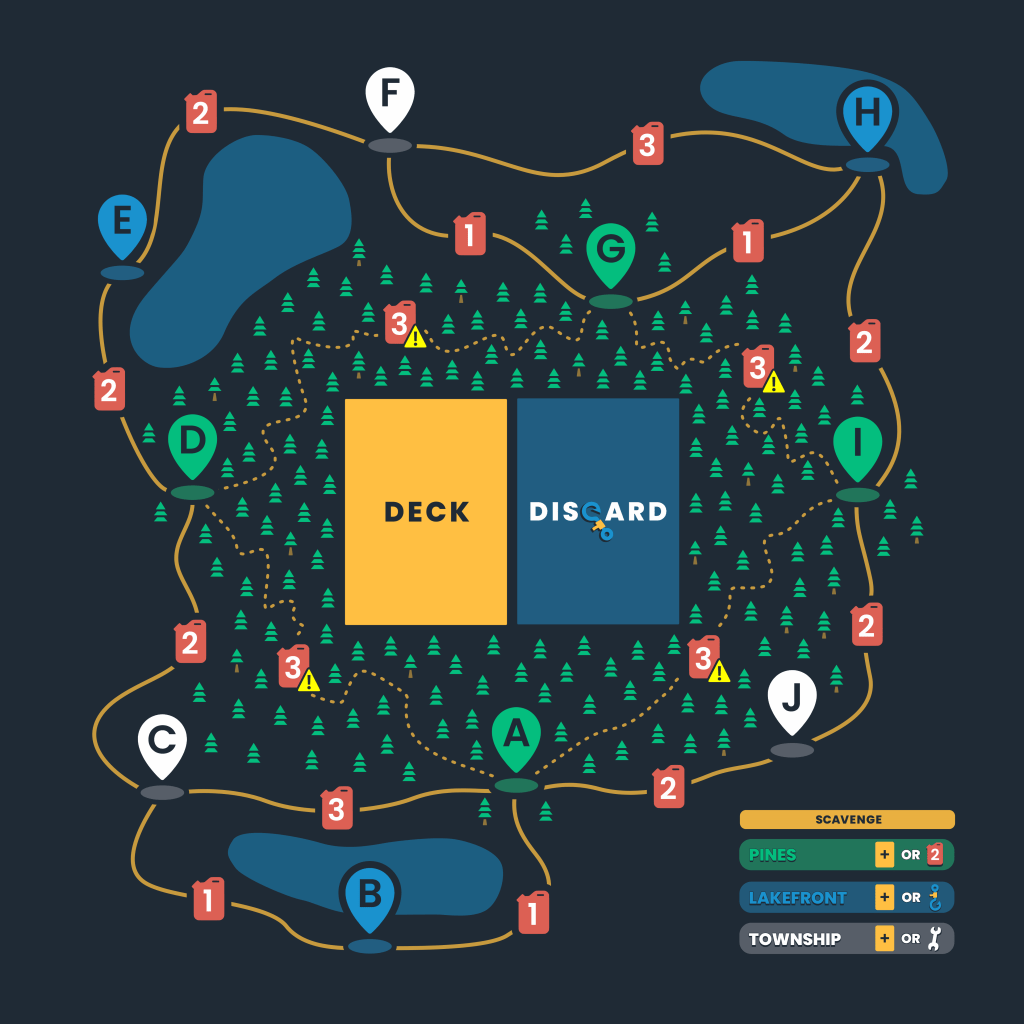
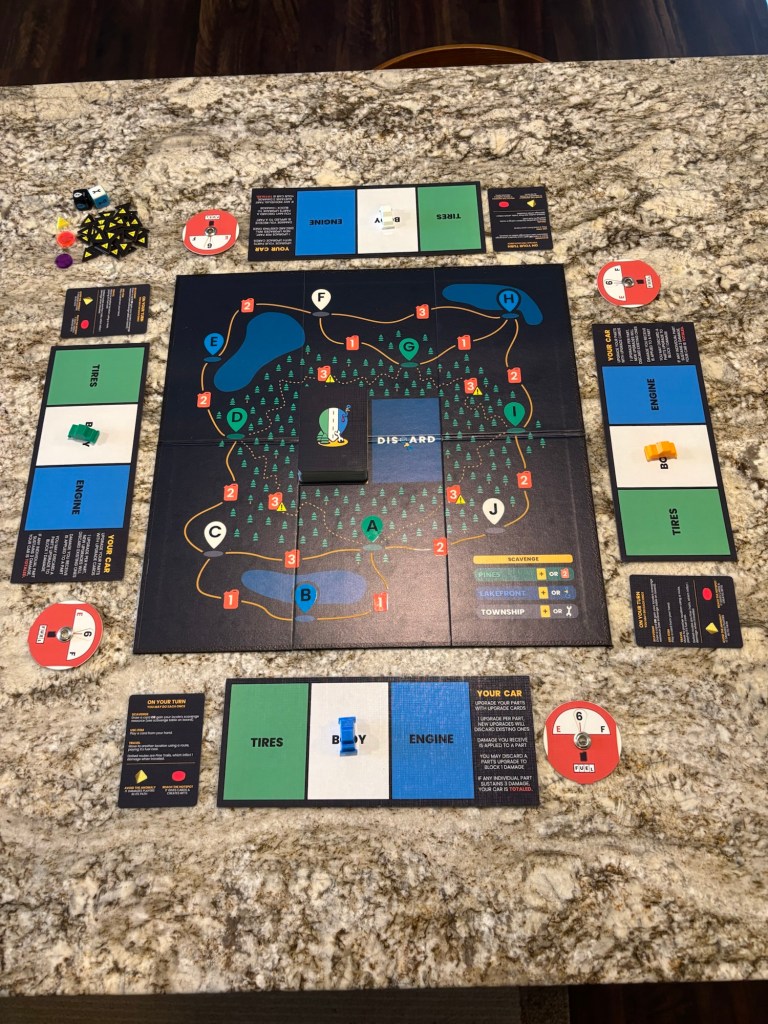
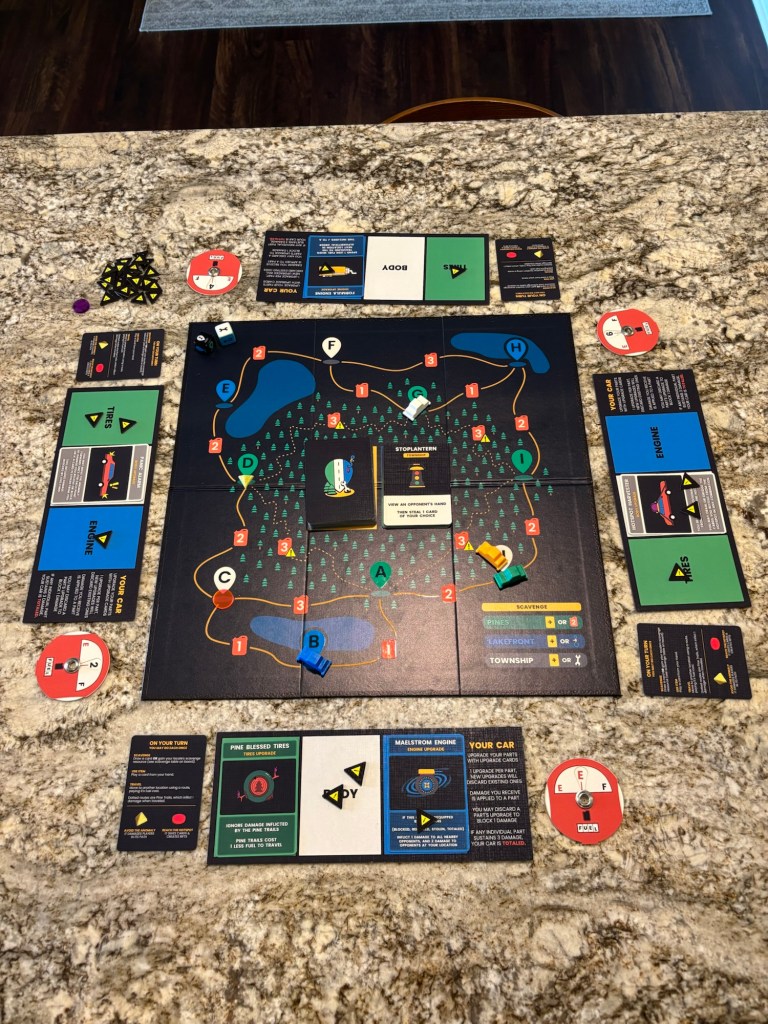
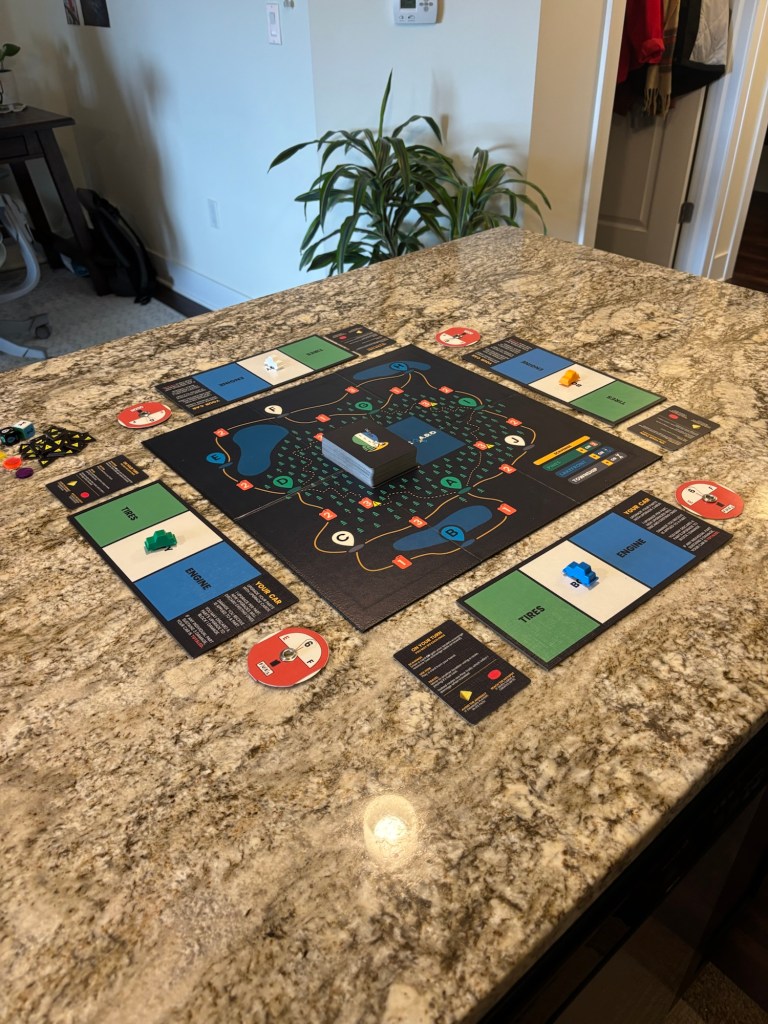
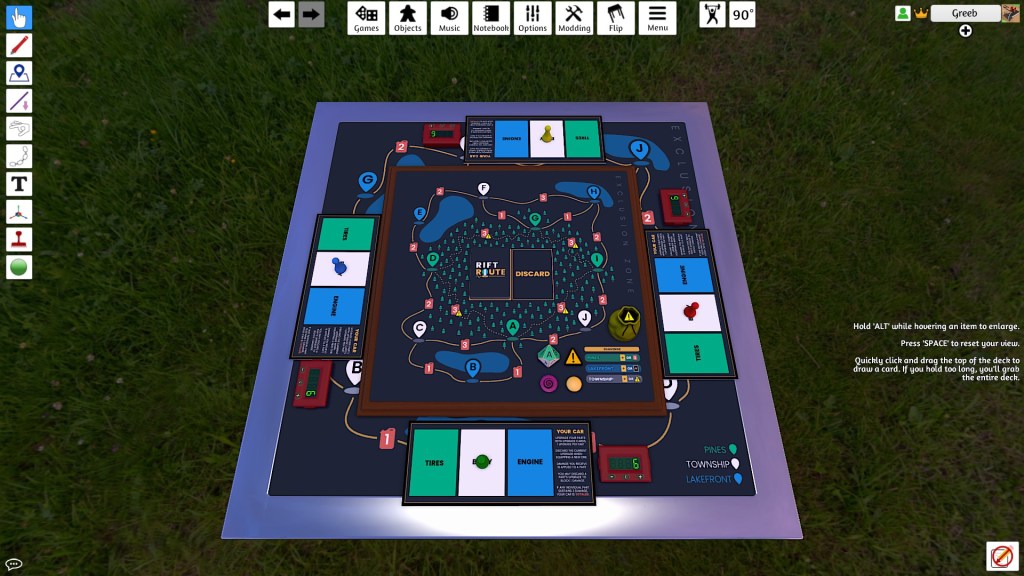
Each match of Rift Route takes place on the game board, with players moving between locations, playing item cards, and scavenging for resources.
The board has two main components: locations and routes.
- Locations – The “spaces” of the board, represented by the colored pins and are each labeled with a letter.
- Routes – The lines connecting locations, indicating which locations can be traveled between, and how much fuel it costs to do so.
Players can do each of the following once per turn:
- Travel – Move along a route to a connected location, paying the fuel cost.
- Use Item – Play an item card from your hand.
- Scavenge – Draw a card OR gain your current location’s locale resource.
Your ultimate goal is to create a Rift and escape through it. There are two methods to create a Rift, but only one Rift can be created.
- An Offering – Visit the Hotspot with 3 items in your hand that match the locale (color) of its current location. Discard those 3 items, and create the Rift there.
- A Sacrifice – If a player’s car is totaled, create the Rift at their location.
If you start your turn at the Rift’s location, you win the match!
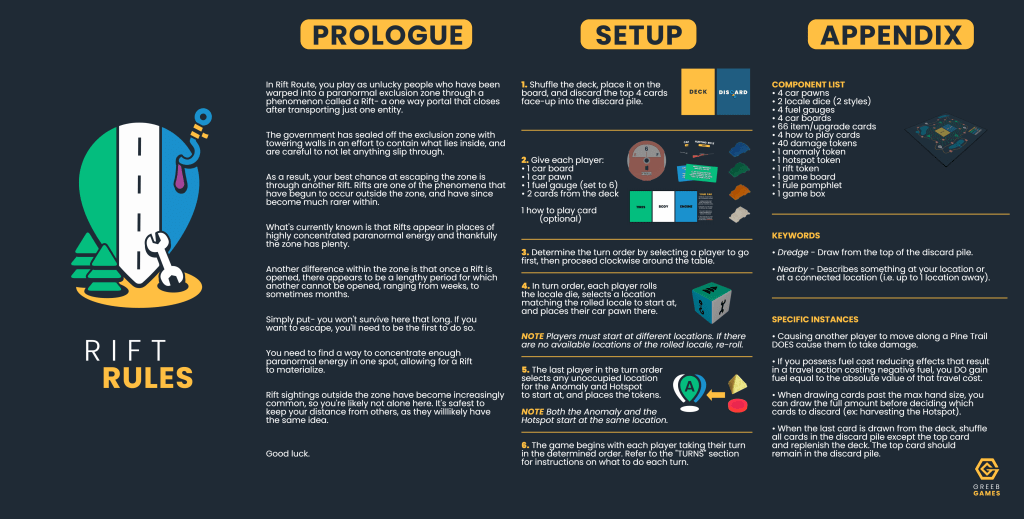
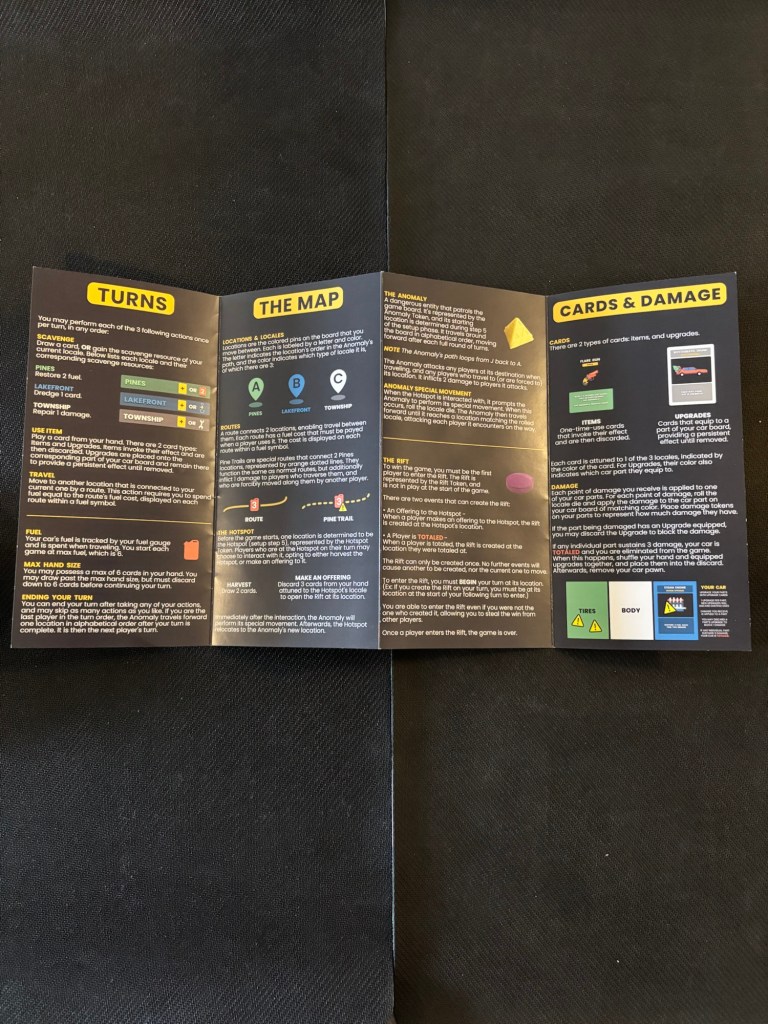
To view the full rules, click to enlarge the rulebook below.

The Printed Version

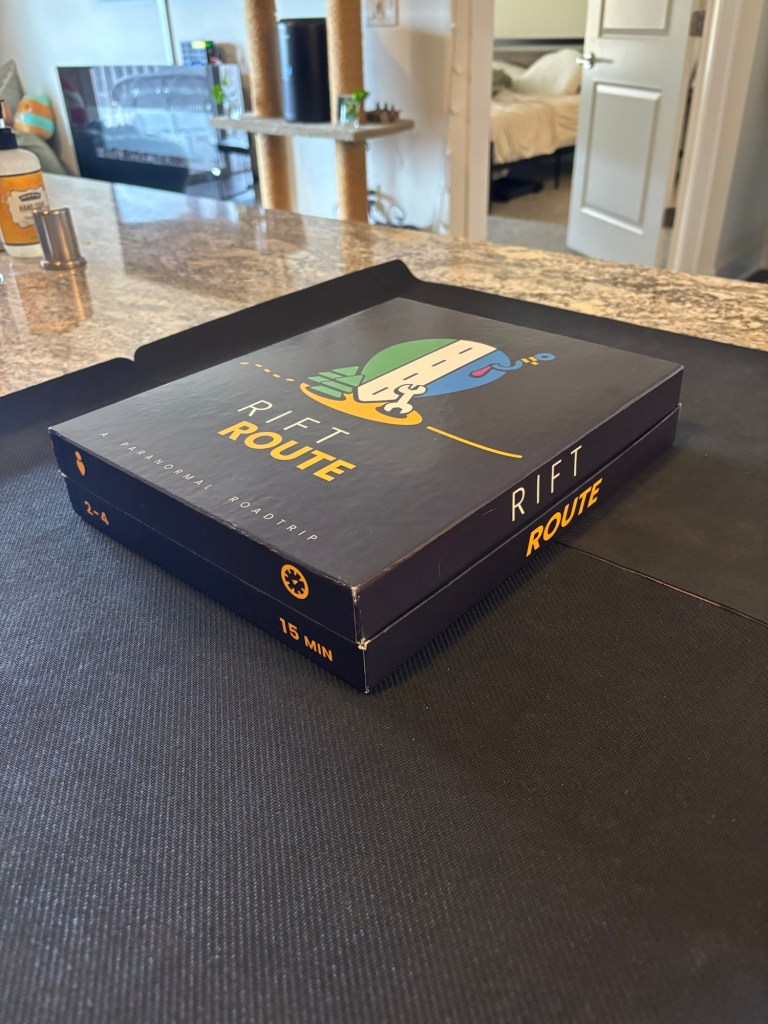

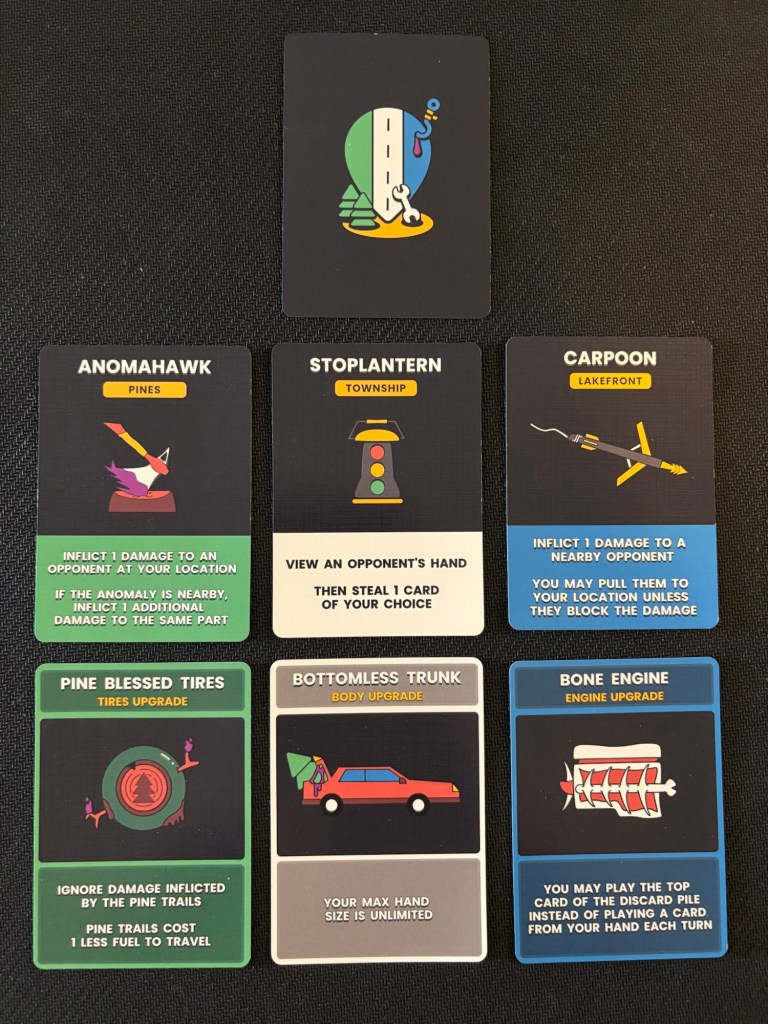




Components
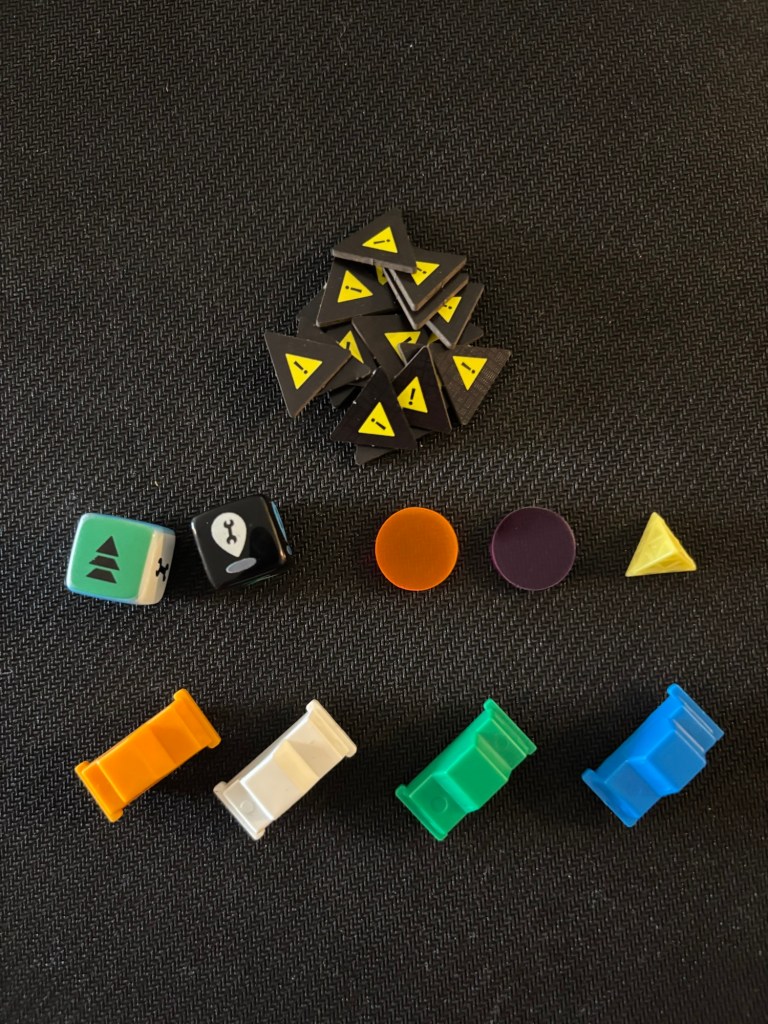
| 4 car pawns | 1 anomaly token |
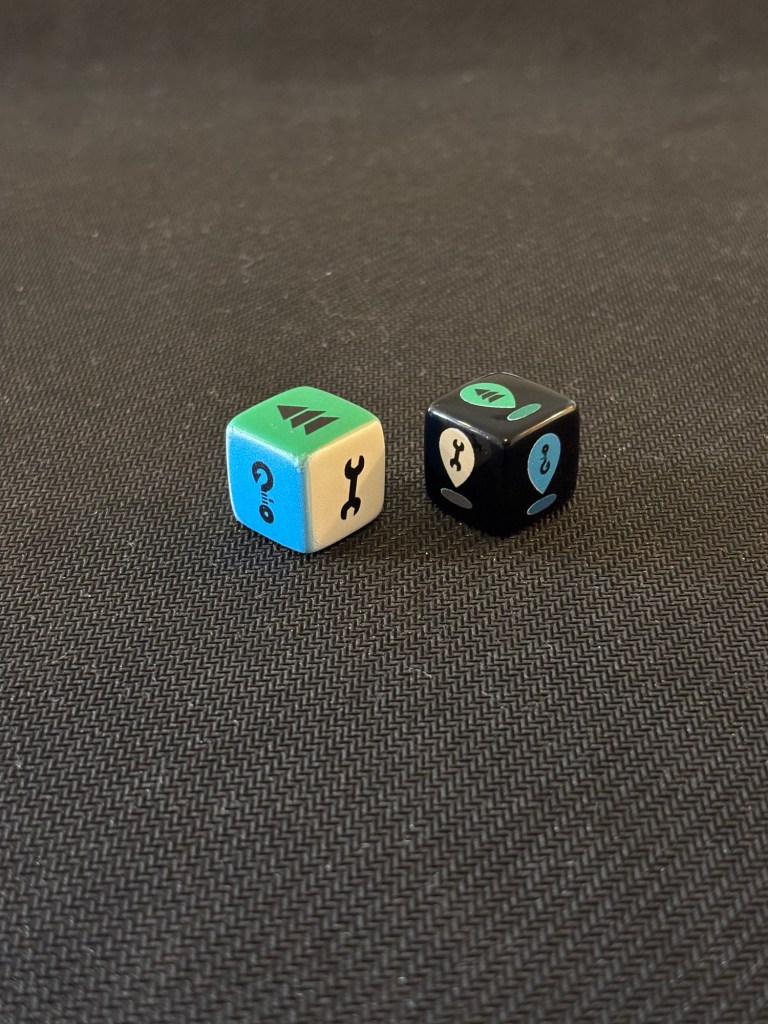
| 2 locale dice (2 styles) | 1 hotspot token |
| 4 fuel gauges | 1 rift token |
| 66 item/upgrade cards | 1 game board |
| 4 “how to play” cards | 1 game box |
| 40 damage tokens |
A Short Development Retrospective
I created Rift Route in 2024 after being inspired by the setting of a video game I played called Pacific Drive. I had mainly developed video games beforehand, and wanted to give tabletop games a try.
The game started out quite differently than its current state. Originally, there were special cards in the deck called “Anomalous Items” that would spawn the Rift if they were used under the right conditions. You also had to manage your car’s battery, and you could even ram other players. After a lot of iteration and playtesting (initially using Tabletop Simulator), I felt that there were too many clashing systems. Players felt like they were being pulled in too many directions, so I decided that I wanted to focus on simplifying the game and ended up removing things that I felt didn’t add much to the game.
This is around the time when I added the locale system. This ended up being the design element of the game I like the most, as it gave me a central pillar to tie the rest of the mechanics to. For example, I was able to color-code the item cards to mirror that of the locales, and relate them to each other thematically. Green items were now themed around the Pines, blue around Lakefronts, and white around Townships. Additionally, it let me tie the components of each player’s car to the colors too. Green would be tires, white would be the body, and blue would be the engine. The color of upgrade cards could now match their respective spaces on the players’ car boards too, and players could roll the locale die to determine which part of their car would receive instances of damage. Lastly, I was able to use this system to rework how Rifts are created. Players could now bring 3 cards of the same color to the Hotspot if it was at a location matching that same color. Overall, the central theme of the locales made the game feel more intuitive and visually cohesive, which helped players understand the game faster and made the game feel more thematic.
Something that also helped me reach the finish line with this game was choosing an art style that was feasible for me to create within. Being a programmer, art is not a strength of mine. So, I decided to go with a somewhat minimalistic approach. I’m fairly happy with how it turned out, though making all of the item cards was easily the most time consuming part of development.
My main goal with Rift Route was to practice running through the process of developing a board game, and hopefully have something cool to show for it. I think I accomplished that goal and had a lot of fun while doing it. If you’re interested, you can purchase a copy from The Game Crafter.
Credits
| Creator | Greeb (Evan Hecht) |
| Playtesters | Kaylee Bird Cody Hecht Thomas Gerke William Samolyk Ashton Peplinski Austin Bruchs Matt Domitrz Adam Gerkhardt Julian Dentice-Cagle |
